
How to Make Money from AI Dubbing and Video Localisation for International Brands
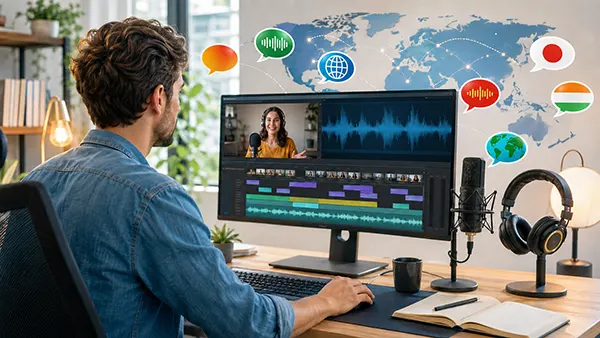
AI dubbing has developed from an experimental feature into a practical part of commercial video localisation. In 2026, companies publish product demonstrations, training videos, advertisements, interviews, webinars and social content for audiences in several countries, but recording every version again with local actors can be slow and expensive. This creates an opening for freelancers who can combine AI-assisted dubbing with translation, cultural adaptation and careful quality control. The work can be carried out from home with a capable computer, reliable headphones and a small selection of specialist tools. The important point is that clients are not paying simply for generated speech. They are paying for a finished video that sounds natural to its intended audience, uses the correct terminology, respects the original speaker and is ready to publish without creating extra work for the marketing team.
Why AI Video Localisation Has Become a Paid Freelance Service in 2026
International companies now produce far more video than they did when localisation mainly concerned television advertising and large corporate films. A software company may have onboarding videos, product tutorials, sales demonstrations and customer education material. An online retailer may publish product videos and social advertising every week. Training businesses, universities, agencies, event organisers and YouTube publishers also maintain large libraries of spoken content. Translating subtitles is useful, but viewers often prefer material they can listen to without constantly reading the screen. AI-assisted dubbing gives businesses another way to reuse existing content across different markets rather than filming the same presentation several times.
The technology available in 2026 has made this type of work accessible to independent specialists. Services such as ElevenLabs, HeyGen and Rask AI can transcribe speech, translate dialogue, generate localised voices and, where required, adjust timing or lip movements. YouTube also provides automatic dubbing and allows creators with the appropriate features to add their own multilingual audio tracks. These tools reduce production time, but they do not remove the need for human judgement. Brand names can be pronounced incorrectly, technical terms may be translated too literally, humour can fail in another culture and a grammatically correct sentence may sound unnatural when spoken aloud.
That gap between automatic output and publishable work is where a freelancer can provide genuine value. A useful service combines several small tasks into one reliable delivery: checking the source material, preparing the script, adapting the translation, producing the new audio, correcting pronunciation, reviewing timing and supplying the final file in the format the client needs. Someone who can manage that process consistently is offering localisation rather than selling access to an AI tool. This distinction matters because businesses can already create basic automatic translations themselves. They are more likely to pay an outside specialist when that person reduces mistakes, protects brand consistency and saves internal staff from managing the details.
What Clients Actually Pay You to Do
A typical project begins before any new voice is generated. The freelancer needs to understand where the video will be published, which audience it targets and which elements must remain unchanged. European Spanish and Latin American Spanish may require different vocabulary. Brazilian and European Portuguese are not interchangeable in every commercial context. French intended for France may differ from Canadian French, while an English version for Britain should not automatically inherit American spelling, expressions or measurements. Product names, abbreviations, names of people and calls to action also need to be identified before translation. Preparing these details saves far more time than correcting dozens of individual lines after dubbing.
The next part of the service is linguistic and audio quality control. AI-generated dialogue should be listened to from beginning to end rather than approved because a short preview sounds convincing. A freelancer should check whether the meaning matches the source, sentences fit naturally into the available time and important words receive the correct emphasis. Names, prices, dates, units of measurement and technical terminology deserve particular attention. The translated audio should not unexpectedly cover music, sound effects or another speaker. If lip-sync is required, the spoken sentence may need to be shortened or rephrased without changing its meaning. These are relatively simple decisions, but together they determine whether the result feels like a local version or an automated translation.
There are also useful additions that can increase the value of a project without turning it into a highly technical service. A freelancer can deliver translated subtitles alongside the dub, prepare localised titles and descriptions, maintain a terminology sheet for future videos and create separate versions for different regions. For a brand with recurring content, the terminology sheet becomes particularly valuable because product names, slogans and preferred wording remain consistent from one video to the next. The client is then buying an organised localisation process rather than commissioning isolated audio files. That makes repeat work more likely and gives the freelancer a clearer reason to charge for quality assurance, project management and language expertise rather than competing only on the lowest price per minute.
How to Build a Home-Based AI Dubbing Workflow That Brands Can Trust
You do not need a recording studio to start offering AI-assisted localisation, but you do need a controlled workflow. A practical home setup can be modest: a computer capable of handling video files, good closed-back headphones, a stable internet connection and enough storage for source and exported files. A microphone is useful if you intend to record your own corrections or voice-over, although it is not essential for every AI dubbing project. It is usually more sensible to learn one primary dubbing tool thoroughly and keep one alternative available than to pay for several subscriptions that perform similar jobs. Clients are interested in the quality and reliability of the final delivery, not the number of applications used to create it.
For each job, keep the original file untouched and create separate working versions for transcription, translation and final export. Start by watching the complete source video. This reveals speaker changes, on-screen text, music, jokes, product demonstrations and sections where timing may be difficult. Next, review the transcript before translating it. Speech recognition can confuse names and specialist vocabulary, and an error in the transcript will usually pass into the translation and then into the dub. Once the translated script is ready, generate the voice track, listen to it against the video and make targeted corrections instead of repeatedly regenerating the entire project.
The final review should be performed as if you were the client preparing to publish the video. Listen with headphones, but also test a short section through ordinary laptop or phone speakers because that is how much online content is consumed. Check the beginning and end of every speaker turn, transitions between sections and any sentence containing a product name, figure or important claim. Export the requested resolution and naming convention, and keep a clean copy of the approved script. For repeat clients, save their pronunciation notes, preferred terminology and regional language choices. These simple records make later projects faster while also reducing the risk of inconsistent translations across a series of videos.
Choosing Tools, Checking Quality and Protecting Voice Rights
Different dubbing tools suit different jobs. ElevenLabs is useful when voice performance and multilingual speech are central to the project. HeyGen combines video translation with options for voice preservation and lip-sync, making it relevant when the person speaking remains visible for much of the video. Rask AI also focuses strongly on multilingual video localisation, including voice cloning and editing controls. The best choice depends on the source language, target language, number of speakers, desired visual synchronisation and commercial usage terms. Free trials are useful for testing, but paid client work should be planned around the features, export quality and usage rights included in the subscription you actually hold.
Human review remains essential even when an AI tool produces a technically clean result. Automatic translation can misunderstand idioms, regional expressions and words that have several possible meanings. Synthetic speech may put the stress on the wrong syllable or read an acronym as a normal word. A voice can also sound fluent while the sentence itself is inappropriate for the market. Ideally, final linguistic review should be performed by a native or near-native speaker of the target language. If you do not speak that language well enough yourself, include an external reviewer in your quote rather than pretending that automated output has been fully checked. This is particularly important for advertising claims, financial information, healthcare content, legal material and instructions where a small wording error can have consequences.
Voice rights require the same attention as translation quality. Do not assume that receiving a video from a client automatically gives you permission to clone every voice in it. Ask the client to confirm that they have the necessary rights and obtain clear approval before creating a synthetic version of a recognisable person’s voice. Keep that approval with the project records. Tool-specific conditions must also be checked because commercial permissions can differ by service and type of production. For example, some dubbing products apply additional restrictions to film, television and other professionally distributed entertainment. International brands may also have internal rules covering the use of employees, presenters and spokespersons. A short rights check at the start of the project is much safer than resolving a dispute after the localised video has already been published.
How to Find Clients, Price Projects and Turn One-Off Jobs into Retainers
The easiest clients to approach are businesses that already publish substantial amounts of video in one language. They have a visible localisation problem that you can demonstrate rather than explain in theory. Look at software companies with tutorial libraries, online training businesses, marketing agencies, e-commerce brands, conference organisers and established video creators. Translation and localisation agencies are another route because many already work with international clients but need freelancers who understand newer AI-assisted dubbing workflows. Current recruitment in the localisation sector increasingly combines linguistic review with synthetic speech editing, cultural adaptation and timing work, so experience across the complete process is more useful than knowledge of one application alone.
A strong proposal should refer to a specific piece of the client’s existing content. Instead of sending a general message offering AI dubbing, explain which video could reasonably be localised and for which audience. A short sample can help, provided you have permission to work with the material and do not publicly imitate a person’s voice without consent. Another option is to use your own recorded demonstration video and present several localised versions in a private portfolio. Show the source, the adapted script and a short finished result. Clients should be able to understand what you corrected and why. A portfolio that demonstrates judgement is much stronger than one containing ten automatic translations with no explanation of the work behind them.
Freelance marketplaces can provide early projects, while direct outreach and specialist localisation suppliers are often more useful for repeat work. The first assignment may be a single product demonstration or a five-video pilot. Treat it as an opportunity to learn the client’s terminology, approval process and publishing schedule. At delivery, make the next logical service easy to understand: the remaining tutorial library, monthly social videos, additional languages or regular quality checks for automatically generated dubs. Recurring work becomes possible when the client knows how long delivery takes, what is included and who is responsible for each stage. Reliability is especially important for international campaigns because one delayed language version can hold up an entire release.
Building a Portfolio and Scaling Without Sacrificing Quality
Pricing should reflect labour, complexity and responsibility rather than the raw cost of generating one minute of synthetic speech. A simple method is to estimate the hours needed for preparation, translation review, dubbing, correction, quality control and communication, multiply those hours by the income you need from your working time, add direct software or reviewer costs and include a reasonable allowance for revisions. For example, if a ten-minute localisation takes two and a half hours of your time, your working target is £35 an hour and direct project costs are £10, the job already represents £97.50 before revision risk or profit is considered. This is an example of a pricing calculation, not an industry tariff, but it demonstrates why charging only a few pounds per finished minute can quickly become unsustainable.
Complexity should be quoted separately when it changes the amount of work. A clean single-speaker tutorial is easier than a fast conversation involving four people. Lip-sync normally requires more checking than audio replacement without visible speakers. Poor source audio can create transcription errors, and technical or regulated material may require specialist linguistic review. Urgent delivery also reduces the time available to schedule reviewers. Define how many revision rounds are included, what counts as a client-requested script change and whether the price covers subtitles, on-screen text or publishing assistance. Clear boundaries protect both sides and make it easier to compare the profitability of different projects.
Scaling does not mean accepting every language or automating every check. A sustainable freelance business usually becomes more specialised as it grows. You might focus on English-to-Spanish product videos, multilingual SaaS tutorials, corporate training or short-form marketing content. Build relationships with trusted native reviewers for languages you cannot assess personally, maintain client glossaries and create repeatable checklists for common errors. Over time, the valuable asset is not the AI subscription but the production knowledge surrounding it: how to prepare difficult material, which voices work for different formats, how to keep terminology consistent and how to deliver several language versions without confusion. AI can make dubbing faster, but the dependable income comes from turning that speed into a localisation service that clients can use repeatedly.